Myth or fact: 6 persistent nutrition myths about weight loss debunked

Myth or fact: 6 persistent nutrition myths about weight loss debunked

Carbohydrates are bad. Eating after six o'clock at night makes you fat. And you lose weight quickly with a juice cleanse. You've probably heard it before. Or read it. Or tried it yourself. So much information circulates about weight loss that you can't see the wood for the trees. What is actually true? In this blog, Dyon Poll, club manager at Happy Bodies Amsterdam Zuid, takes a closer look at six persistent nutritional myths. Without judgment, but with nuance.

Myth 1: Carbohydrates make you fat

This is a persistent one. Carbohydrates have gained a bad reputation due to diets like Atkins and keto. But the truth is more nuanced.

Carbohydrates themselves don't make you fat. Too many calories make you fat. And yes, if you eat mountains of pasta, bread, and cookies, you consume a lot of calories. But that applies just as much to fat or protein.

Carbohydrates are actually your most important energy source. Especially when you exercise. Your muscles need glucose to perform. Without carbohydrates, you feel weak and tired during your workout.

What does this mean for you? Choose whole-grain varieties and eat carbohydrates around your training. A slice of bread with peanut butter before working out gives you energy. A bowl of rice after working out helps with your recovery.

Myth 2: Eating after 6:00 PM makes you fat

This myth sounds logical. You burn fewer calories in the evening, so what you eat is stored as fat. Right?

No. Your body doesn't look at the clock. It looks at your total calorie intake over the entire day. Whether you eat those 2,000 calories at 12 or 8 pm makes no difference to your weight.

What really matters: what and how much you eat. Many people snack in the evening in front of the TV. Chips, chocolate, a glass of wine. That adds up. Not the time, but the choices.

What does this mean for you? Do you train in the evening? Then feel free to eat afterwards. Your body needs that fuel to recover. Just be mindful of what you eat. A meal with protein and vegetables is smart. A bag of chips is not.

Myth 3: You lose weight quickly with a juice cleanse or detox.

Juice cleanses, detox shakes, smoothie diets. They promise quick results. And yes, you lose weight. Temporarily.

What happens: you consume very few calories. It makes sense that you lose weight. But you mainly lose water and muscle mass. Not fat. As soon as you eat normally again, the weight comes back. Often with interest.

Moreover: your body does not need a juice cleanse to “detox”. You have a liver and kidneys for that. They do that work 24 hours a day, for free.

What does this mean for you? Save your money and your muscles. A juice cleanse is not a sustainable solution. Healthy weight loss is achieved through a slight calorie deficit, sufficient protein, and exercise.

Myth 4: You must avoid fat to lose weight

For a long time, we thought: fat makes you fat. Logical, right? But that's not how your body works.

Fats are necessary for the absorption of vitamins, the production of hormones, and the proper functioning of your brain. You cannot live a healthy life without fat. It is about the type of fat you eat.

Saturated fats from fried food and fatty snacks are less beneficial. Unsaturated fats from avocado, nuts, olive oil, and fatty fish, on the other hand, are healthy. They keep you feeling full longer and prevent you from snacking.

What does this mean for you? Feel free to eat a handful of nuts as a snack. Or half an avocado with your lunch. Those fats are more satiating than a cookie and provide your body with valuable nutrients.

Myth 5: Cardio alone is enough to lose weight

Running, cycling, the elliptical trainer. Many people think that cardio is the way to lose weight. After all, you burn calories.

That's correct. But there is a catch. With cardio alone, you also lose muscle mass. And muscle mass determines your resting metabolic rate. Less muscle means lower calorie burning at rest. In the long run, it doesn't get you very far.

The combination of strength and cardio works better. Strength training builds muscle. Those muscles burn calories, even when you are not doing anything. Cardio is good for your heart and fitness. Together, they are a golden duo.

What does this mean for you? The Milon Circle combines strength and cardio in 35 minutes. That is why it works so well for weight loss.

Myth 6: Weight loss pills and injections are the fastest way

Ozempic, Wegovy, weight loss pills. You read about them more and more. And yes, some people lose a lot of weight with them.

There is a big 'but' to this 'solution'. These products were developed for people with severe obesity or type 2 diabetes. Under medical supervision. They are not a miracle cure for everyone who wants to lose a few kilos.

Moreover, if you stop the injections, the weight often comes back. After all, you haven't learned to eat or exercise differently. And here too, the rule applies: you lose not only fat, but also muscle mass.

What does this mean for you? For most people, the combination of a healthy diet and regular exercise is more effective, safer, and more sustainable. No pills, no injections. Just train smart and eat consciously.

So how do you lose weight healthily?

Many of these myths and methods have something in common: they lead to a loss of muscle mass. And that is exactly what you don't want. Less muscle means a lower metabolism. In the long run, this actually makes losing weight more difficult.

The formula is simpler than you think. Combine a healthy diet with strength training. This way, you lose fat mass and maintain your muscles. Your metabolism stays at a healthy level. And your results last.

No quick fixes. No extreme diets. Just an approach that works.

Want to know more?

Do you want to lose weight in a way that fits your life? Take the membership test and sign up for a free introductory consultation. Then we will discuss together what works for you. We bet you'll be surprised!

Slim & fit in 2 x 35 minutes every 10 days


Plan a free trial training or do the online membership test and discover in 1 minute which program suits you. Would you rather come and have a look first? Plan your free consultation guided tour.


Free health tips

Sign up for the newsletter below and receive practical tips and be the first to know about new blogs:


Is the Milon Circle nonsense? This is what science says.

Is the Milon Circle nonsense? This is what science says.

Training for 35 minutes, twice every ten days. And achieving results too? It sounds too good to be true. Perhaps you’ve thought: surely this can’t work? Or you’ve heard someone say it. An understandable reaction. We are used to thinking that training longer is automatically better. In this blog, Hugo Wieringa, club manager at Happy Bodies, explains the science behind the Milon Circle and why training for a shorter time is sometimes smarter.

Why we think that training longer is better

Most people associate fitness with hours of toiling. An hour on the treadmill, followed by some weights, and then you might be doing well. That idea is deeply ingrained. But is it actually true?

Not necessarily. It is not about how much time you spend at the gym. It is about what your body does during and after that workout.

The science behind the Milon Circle

The Milon Circle combines strength training and cardio in a single 35-minute session. You train all major muscle groups: legs, back, chest, shoulders, and arms. In between, you keep your heart rate high with short cardio bursts. That combination is exactly what research indicates is effective.

Studies show that the combination of strength and cardio yields better results than cardio alone. Strength training builds muscle mass. And muscle mass increases your resting metabolism. The more muscle you have, the more calories you burn. Even when you are sitting on the couch.

The EPOC effect: why you keep burning calories after your workout

This is where it gets really interesting. After an intense strength training session, your body continues to burn extra calories for hours. This is called the EPOC effect, which stands for Excess Post-Exercise Oxygen Consumption. In plain language: your body needs extra oxygen to recover after the workout. That recovery process costs energy.

With gentle cardio, such as an hour-long walk, this effect is minimal. With intensive strength training, it can last for hours. You train for 35 minutes, but your body continues working afterward.

What happens during those 35 minutes?

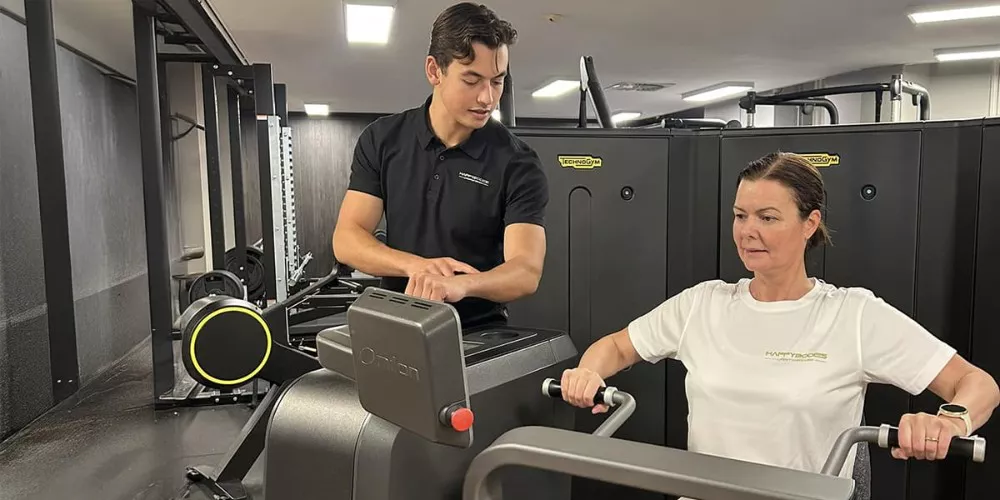
You start with a warm-up on the cardio machines. This is followed by six strength exercises, alternated with short cardio bursts. You do not adjust each machine yourself. The Milon machines recognize you via a personal chip and adjust automatically. Seat height, weight, resistance: everything is set correctly immediately.

This has two advantages. You don't waste time setting up equipment. And you always train safely, because the resistance matches your strength. After 35 minutes, you have completed a full workout. All muscle groups, including cardio.

Does the Milon Circle really work? We see this in practice.

At Happy Bodies, many people train who previously failed to achieve results at other gyms. Often this is because they only did cardio, or because they didn't know how to use the machines. The combination of personal guidance and smart equipment makes all the difference.

What we often hear from new members: “I thought 35 minutes was too short. But after that first workout, I felt exactly what you mean.” That surprise is relatable. And there is a simple explanation behind it: there isn't a minute of rest in those 35 minutes. Whereas in a traditional gym you spend time waiting for machines, setting up equipment, and taking recovery breaks, in the Milon Circle you train non-stop. As a result, you achieve the same effect in 35 minutes as with a two-hour workout.

The benefits at a glance

In addition to losing weight and getting fitter, regular training on the Milon Circle has more benefits. You maintain muscle mass as you get older. This helps you remain independent. You prevent or reduce back, neck, and joint complaints. And you reduce the risk of chronic conditions such as type 2 diabetes and cardiovascular disease.

All of that in two 35-minute sessions every ten days. No hours at the gym. No complicated schedules.

Is the Milon Circle nonsense? The short answer

No. The Milon Circle is based on proven principles: the combination of strength and cardio, the EPOC effect, and training all major muscle groups. The technology makes it safe and efficient. And the short duration fits into a busy life.

It is not a miracle cure. You still have to come to training. But if you do, it works. We see that every day.

Want to know more?

Curious if the Milon Circle is right for you? Take the membership test and sign up for a free introductory consultation. We'll show you what's possible in 35 minutes. We bet you'll be surprised!


Slim & fit in 2 x 35 minutes every 10 days


Plan a free trial training or do the online membership test and discover in 1 minute which program suits you. Would you rather come and have a look first? Plan your free consultation guided tour.


Free health tips

Sign up for the newsletter below and receive practical tips and be the first to know about new blogs:


Losing weight during menopause is difficult, but not impossible

Losing weight during menopause is difficult, but not impossible

You're eating the same way you used to. You might even be exercising more. And yet, those pants feel tighter than a year ago. Sound familiar? You're not alone. Many women notice around the age of fifty that losing weight suddenly becomes a lot harder. That stubborn belly fat, in particular, seems to take on a life of its own. In this blog post, Hugo Wieringa, franchisee at Happy Bodies, explains why losing weight during menopause is so difficult and what you can do about it.

Your body is changing, and it's not your fault

Let's start with the good news: it's not your willpower. During menopause, estrogen levels drop in every woman. This hormone plays a key role in body fat distribution. Before menopause, your body stores fat primarily around your hips and thighs. After menopause, that fat shifts to your abdomen.

In addition, your metabolism slows down. From the age of thirty, you lose about 3 to 5 percent of your muscle mass every decade if you don't do anything about it. This process is called sarcopeniaLess muscle mass means fewer calories burned at rest. Your basal metabolic rate decreases. And since resting metabolic rate accounts for about 60 to 75 percent of your daily energy expenditure, that adds up considerably.

Why Eating Less Alone Doesn't Work

The logical thinking is: eat less, and you'll lose weight. But it's not that simple. If you eat too little, your body goes into energy saving mode. Your metabolism slows down even further. Moreover, your body breaks down muscle mass to generate energy. The result? You might lose weight temporarily, but as soon as you eat normally again, the pounds come back twice as fast. yo-yo effect many women know this all too well.

Out research from Harvard Medical School It turns out that strength training is the most effective way to maintain muscle mass as you age. And you need that muscle mass to maintain your metabolism.

Strength training is your best friend after fifty

Many women think of cardio when they think about losing weight: running, cycling, the elliptical. That's certainly good for your fitness and your heart. But for weight loss during menopause, strength training is just as important.

Muscles burn more calories than fat tissueEven when you sleep. The more muscle mass you have, the higher your resting calorie burn. Strength training not only helps you lose weight, but also helps you keep it off.

At Happy Bodies, we see this every day. Women who only did cardio for years and didn't lose weight suddenly see results when they add strength training. The combination of strength and cardio works best, and it's precisely that combination that offers the Milon Circle in 35 minutes.

Five tips for losing weight during menopause

Losing weight after fifty requires a different approach than losing weight at thirty. These five tips will help you get started.

1. Make strength training a priority

Train your major muscle groups once or twice a week, such as your legs, back, chest, and arms. You don't have to lift heavy weights. The resistance of the Milon machines automatically adjusts to your strength, ensuring a safe and effective workout.

2. Eat enough protein

Your body needs nutrients to maintain and build muscle. Eat a protein source with every meal: eggs, fish, legumes, cottage cheese, or chicken. A good guideline is 1 to 1.2 grams of protein per kilogram of body weight per day.

3. Get enough sleep

During menopause, many women experience poor sleep due to hot flashes and night sweats. However, sleep is essential for recovery and hormone balance. Try to maintain a regular sleep schedule and avoid screens right before bed.

4. Exercise outside of your workout as well

In addition to your strength training, daily exercise helps. Take the stairs, go walking during your lunch break, cycling to the supermarket. All those little moments add up.

5. Be patient with yourself

Losing weight during menopause is slower than before. That's frustrating, but normal. Don't just focus on the scale. Pay attention to how you feel, how your clothes fit, and how much energy you have.

You're not too old for results

At Happy Bodies, many women between the ages of 50 and 70 train. The average age in our clubs is around 55. Every day we see that it is possible: to get fitter, stronger, and yes, even to lose weight. With the right accompaniment and an approach that suits your body.

What do all these tips have in common? Strength training is the common thread. It's the foundation upon which all other habits can be built. Without muscle mass, your metabolism remains low, no matter how healthy you eat or how much you walk. That's why at Happy Bodies, strength training is central to everything we do.

A new phase, a new approach

Menopause isn't an end point. It's a new phase in which your body needs different things. Strength training, a healthy diet, and patience make all the difference. You're not too old. And it's not your fault that things have become more difficult.

At Happy Bodies, we understand that. Our Milon circle combines strength training and cardio in a single 35-minute workout. The machines automatically adjust to your body, so you can train safely without risk of injury. And our coaches provide personalized guidance, so you know you're on the right track.

Want to know more?

Do you want to know how to work on your strength and fitness in just two 35-minute sessions every ten days, under the guidance of a personal lifestyle coach? Take the membership test and sign up for a free introductory meeting. Discover if this approach is right for you.

Slim & fit in 2 x 35 minutes every 10 days


Plan a free trial training or do the online membership test and discover in 1 minute which program suits you. Would you rather come and have a look first? Plan your free consultation guided tour.


Free health tips

Sign up for the newsletter below and receive practical tips and be the first to know about new blogs:


Why Crash Diets Backfire in the Long Run

Why Crash Diets Backfire in the Long Run

Your inbox is full of "lose 10 kilos in 2 weeks" promises. January is the perfect time to shed those extra holiday pounds, right? Tempting? Absolutely. Effective? Absolutely not. In this blog post, we'll explain why crash diets sabotage your metabolism and how you can start the new year sustainably.

The crash diet illusion

A crash diet works simply: you eat extremely little, often just 800-1000 calories a day. The first week will fly by. The pounds will fall off, and you'll fit into those old jeans again. Good luck!

But what are you actually losing? Primarily water and muscle mass. For every three kilos you lose, often only one kilo is actual fat. The rest? Valuable muscle and water. And you really need that muscle for a healthy metabolism.

Your body in panic

With extreme calorie restriction, your body thinks it's in a famine. It switches to survival mode. Your metabolism slows by as much as 20-30%. Your body becomes more frugal with every calorie it consumes.

Simultaneously, your hunger hormone ghrelin rises and your satiety hormone leptin drops. The result? Cravings. Your body screams for food. That's why crash diets are so difficult to maintain. It's not a lack of willpower—you're fighting against your own biology.

The yo-yo effect is lurking

After weeks of deprivation, you can't hold out any longer. You start eating normally again. But your metabolism is still running at a low ebb. Your body is now extra inclined to store calories as fat—a defense against the next "famine."

This yo-yo effect There's no guarantee, but the chance of it happening increases significantly after a crash diet. With every crash diet, this risk increases. Your metabolism slows, losing weight becomes harder, and the chance of regaining more than you lost increases.

The sustainable approach for this new year

Let go of that January panic. You've already started—this is week one of the new year. Make it a success with a plan that works:

Start with small changes. Replace soda with water. Choose whole-wheat bread instead of white. Add a serving of vegetables to every meal. small changes are sustainable and add up.

Aim for a modest calorie reduction of 300-500 calories per day. This will result in a healthy weight loss of half a kilo per week. Less dramatic than a crash diet, but you will maintain your muscle mass and your metabolism stays at the right level.

Add movement, but don't overdo it

Don't compensate with extreme sports. Five hours a week in the gym after weeks of sitting still during the holidays? A recipe for injuries and burnout. Start slowly with two sessions a week. short strength trainingBuild up slowly.

The Milon Circle At Happy Bodies, training is perfect for a healthy start. In 35 minutes, you'll train your entire body without straining. Twice every ten days is enough to boost your metabolism without exhausting your body.

Focus on habits, not the scale

Stop weighing yourself daily. Focus on developing healthy habits. Drink plenty of water. Sleep 7-8 hours a night. Eat enough protein. Exercise daily, even if it's just a walk.

These habits may seem small, but they transform your health from the inside out. Not a quick fix, but a lifestyle that you can maintain all year round.

It's only January – you have all the time in the world

The year has just begun. You have 51 weeks ahead of you. Use them wisely. No drastic measures that you'll abandon by mid-February. But sustainable changes that will still be a part of your life a year from now.

Start one healthy habit today. Add another tomorrow. In a month, you'll have a new routine. In a year, a new lifestyle. No stress, no crash diets, and most importantly: no yo-yo effect.

Slim & fit in 2 x 35 minutes every 10 days


Plan a free trial training or do the online membership test and discover in 1 minute which program suits you. Would you rather come and have a look first? Plan your free consultation guided tour.


Free health tips

Sign up for the newsletter below and receive practical tips and be the first to know about new blogs:


Happy Bodies Apeldoorn

Happy Bodies Apeldoorn has been completely renovated and is offering 100 free months of fitness!

Great news for everyone in Apeldoorn and the surrounding area: our club's transformation is complete! After the acquisition a few months ago, Happy Bodies Apeldoorn will be completely renovated by the end of 2025. We'll be celebrating this in early 2026 with a spectacular opening deal: we're giving away 100 times 1 month of free fitness away!


Apeldoorn is ready for a new way to exercise. Over the past few months, we've been working hard to modernize the club and bring the unique Happy Bodies experience to the city. Whether you haven't exercised in years or are looking for an efficient way to stay fit, our revamped lifestyle club is the place where results and convenience come together.


Fit in just 35 minutes per session

No more hour-long gym sessions, but smart and effective training. In our completely renovated club in Apeldoorn, you'll train just twice a week for 35 minutes on the state-of-the-art Milon Circle. Always under the watchful eye of an experienced lifestyle coach who will ensure you get the most out of your workout.


This is what you can expect from the brand new Happy Bodies Apeldoorn (club 29):


Result guarantee: Thanks to smart technology you achieve safe and guaranteed results.

Time saving: You'll be ready in just 35 minutes.

Safety at the forefront: No risk of injury due to the automatic settings of the devices.


Claim your free month here ➝ Please note: there are only 100 passes available for this opening deal, so while supplies last.


What makes Happy Bodies the alternative to a regular gym?

Many people dread the entrance of a traditional gym. At Happy Bodies, we do things differently. We make strength and cardio training accessible to everyone, regardless of age or fitness level.

  • Personal approachYou train with a program that is completely tailored to your body and goals.
  • Always welcomeOur club is open 365 days a year, so you can train whenever it suits you.
  • Guidance with a smileOur coaches are there to motivate you, not to command you.
  • Innovative technologyThe Milon Circle automatically adjusts to you. Just follow the ball on the screen – exercising has never been easier.


Discover it yourself (without any obligation)

Are you unsure whether this training method is right for you? No problem. Take the online membership test to see which program suits you, or book directly free trial training on our calendar. Experience the atmosphere of our renovated club in Apeldoorn for yourself!


📍You can find us at our familiar (but renovated!) location in Apeldoorn at Asselsestraat 260.

We can't wait to show you how beautiful the club has become. Register quickly for that free month, because the first registrations are already coming in!


Why rest is just as important as exercise

Why rest is just as important as exercise

The year is drawing to a close. Between Christmas and New Year's, we live in a kind of limbo – the days blend together, your workout routine is gone, and that feeling of guilt is starting to nag. Stop it. This period of rest between the holidays might just be what your body needs. In this blog post, we'll explain why rest is just as important as training and how you can start the new year feeling refreshed.

This strange week as a natural recovery moment

December forces us to slow down. Family visits, elaborate dinners, a week off—your normal routine falls away. Many athletes feel guilty about this. But what if this break is actually a blessing?

Your body probably needs this break more than you think. After a year of deadlines, training, and commitments, this enforced rest is a natural recovery time. Your muscles will fully recover, your mental batteries will recharge, and your motivation for January will grow.

Professional athletes consciously schedule rest periods into their schedules. They know: without recovery, there's no progress. These days between the holidays are your built-in recovery period.

The science behind supercompensation

During training, you break down muscles. During rest, you build them back up. This process is called supercompensation. Your body not only repairs the damage but also makes you stronger than before – provided you get enough rest.

Insufficient rest disrupts this process. You remain stuck in the breakdown phase. The result? Stagnation, decreased performance, and increased risk of injury. Many dedicated athletes train to exhaustion by ignoring this principle.

The irony: by doing less, you achieve more. These rest days between parties? They can make you stronger than weeks of continuous training. Your body finally gets the chance to fully repair all the training damage.

Active versus passive recovery

Rest doesn't mean lying on the couch all day. There are two types of recovery, and both are valuable.

Passive recovery is complete rest. Sleep, relax, read a book. Your body is fully focused on repairing itself. This is essential after intense training periods or when you're tired. These days between parties offer the perfect opportunity for this.

Active recovery keeps your body moving without straining. A calm winter walk, yoga Or swim at a leisurely pace. This stimulates blood circulation, which speeds up the removal of waste products and improves the absorption of nutrients.

The perfect mix? Alternate between the two. A day of complete rest, followed by light exercise. Listen to your body – it'll tell you what it needs.

Signs you need more rest

Your body gives clear signals when rest is necessary. Do you recognize these signs?

  • Your performance declines despite training
  • You are constantly tired, even after a good night's sleep
  • You get sick faster
  • Your motivation is gone
  • Minor injuries heal slowly
  • You sleep restlessly
  • You are irritable or emotional

Don't ignore these signals. They're your body's way of saying: stop, recover first. This rest period will likely come just in time.

Sleep: Your Secret Weapon

Of all the recovery factors, sleep The most important. During deep sleep, your body produces growth hormone, essential for muscle building and recovery. Too little sleep sabotages all your training efforts.

These days between the holidays offer you the chance to catch up on your sleep debt. No alarm clock, no rush. Use this time to rediscover your natural sleep rhythm. How many hours do you really need? When do you feel your best?

In the new year, aim for 7-9 hours of sleep per night. Prioritize this as much as your workouts. Better sleep means better performance, faster recovery, and more energy.

Mental recovery is physical recovery

Stress increases cortisol, a hormone that promotes muscle breakdown and slows recovery. Chronic stress negates all your training efforts. You can train and eat perfectly, but without mental rest, you won't make any progress.

These days between the holidays force you to recover mentally. A break from work stress, no deadlines. Quality time with yourself or loved ones. This mental reset is just as valuable as physical recovery. Your cortisol drops, allowing your body to finally fully recover.

The perfect preparation for January

January begins in a few days. Don't see these rest days as wasted time, but as an investment. You'll be better prepared than if you had trained more.

Your muscles have fully recovered. Your motivation is back. Your energy levels are optimal. This is the perfect starting point for your 2026 goals. Don't start with guilt, but with gratitude for the rest your body received.

In the new year, consciously plan rest periods. A lighter week each month. A longer break each quarter. This way, you'll prevent overtraining and continue making progress throughout the year.

Early January rested, not exhausted

These days between the holidays offer you the perfect reset. Use this energy wisely as January begins. Don't start by catching up, but build up gradually. Your body is ready for new challenges.

At Happy Bodies we understand the importance of the right balance between training and recovery. Our Milon Circle is designed with built-in recovery days. Two workouts every ten days provide your body with optimal stimulation and sufficient recovery time.

Make 2026 the year you train smarter, not harder. Where rest isn't a luxury, but a necessity. Where you listen to your body instead of fighting it. Start rested, stay balanced, and achieve more than ever.

Slim & fit in 2 x 35 minutes every 10 days


Plan a free trial training or do the online membership test and discover in 1 minute which program suits you. Would you rather come and have a look first? Plan your free consultation guided tour.


Free health tips

Sign up for the newsletter below and receive practical tips and be the first to know about new blogs:


Why every woman should do strength training

Why every woman should do strength training

When you think of strength training, do you picture bodybuilders with massive muscles? Time to adjust that image. Strength training is one of the best health investments, especially for women. In this blog post, we'll explain why every woman—regardless of age or fitness level—benefits from strength training and how you can start today.

The biggest misconception: “It makes me too muscular.”

The fear of looking like the hulk prevents many women from starting strength training. But this fear is unfounded. Women produce 10 to 30 times less testosterone than men. This hormone is essential for significant muscle growth.

So what happens? You become stronger, more toned, and fitter. Your muscles become defined, not hulking. Think of a toned body, not bodybuilder proportions. Those women with extreme muscle mass you sometimes see? They train extremely intensively for years, often with special supplements. That doesn't happen by accident with strength training twice a week.

Stronger bones, especially after the age of forty

From the age of 30, you lose bone mass annually. In women, this process accelerates during menopause due to declining estrogen levels. The result? An increased risk of osteoporosis and bone fractures.

Strength training is one of the few ways to slow and reverse this process. The pressure your muscles exert on your bones during strength training stimulates bone formation. Studies show that women who strength train twice a week can increase their bone density by 1-2% per year. That may not seem like much, but over ten years, it represents a significant reduction in fracture risk.

Your metabolism gets a permanent boost

Muscle mass is metabolically active tissue. Every kilogram of muscle burns calories daily, even at rest. More muscle means a faster metabolism, making it easier to maintain a healthy weight.

This is especially important during menopause. Many women experience weight gain due to hormonal changes. Strength training helps counteract this. You not only build muscle but also prevent its loss. From the age of 30, without training, you lose 3-8% of your muscle mass per decade.

Developing mental strength

The benefits extend beyond the physical. Strength training does wonders for your mental healthThat feeling when you can lift your own body weight for the first time or handle heavier resistance? Priceless.

Research shows that strength training reduces anxiety and depression. It increases endorphin production and improves your sleep quality. Moreover, it gives you control: you're actively working on your health instead of passively waiting for the effects of aging.

Perfect for busy women

No time for hours of gym time? No problem. Effective strength training doesn't have to take long. With the Milon Circle Train your entire body in 35 minutes. The machines automatically adjust to your body and strength, so you don't waste time changing weights.

Two sessions every ten days are enough for noticeable results. Perfect for fitting in between work, family, and other commitments. And because the equipment adapts to your level, it's safe for beginners and challenging for advanced users.

Functional strength for everyday life

Strength training makes daily tasks easier. Carrying groceries, playing with the childrenWalking up the stairs – everything goes more smoothly with strong muscles. A stronger core prevents back problems. Your balance improves, making you less likely to fall.

This functional strength becomes more important as you age. The difference between remaining independent and becoming dependent often lies in muscle strength. Women who train strength later in life maintain their independence longer.

How do you get started today?

Start small. You don't have to start lugging heavy weights right away. Begin with bodyweight exercises: squats, wall push-ups, planks. Build up gradually.

Seek guidance if you're unsure. A good coach will teach you the correct technique and prevent injuries. At Happy Bodies, you'll receive personal guidance that suits your level and goals.

Focus on consistency, not perfection. A short workout twice a week is better than a marathon session once a month. Celebrate small successes—your first full push-up, a heavier resistance, better form.

The best time to start? Now

Whether you're 30, 50, or 70, it's never too late to start strength training. Research shows that even women over 80 can still build muscle mass. The sooner you start, the more you'll benefit. But even if you start later, the benefits are enormous.

Strength training isn't a trend or a fad. It's an investment in your future. In your bones, your muscles, your mental health, and your independence. Stop waiting for the perfect moment. That moment is now.

Slim & fit in 2 x 35 minutes every 10 days


Plan a free trial training or do the online membership test and discover in 1 minute which program suits you. Would you rather come and have a look first? Plan your free consultation guided tour.


Free health tips

Sign up for the newsletter below and receive practical tips and be the first to know about new blogs:


Wooden snack board with healthy snacks

Cooking with fewer calories: smart swaps in the kitchen

Zucchini spaghetti, cauliflower rice, banana ice cream—the supermarket is now full of lighter alternatives for your favorite dishes. But do these swaps really work? And more importantly, do they taste good? In this blog post, we'll tell you which kitchen swaps are truly worth trying and how you can enjoy your favorite foods guilt-free.

Why small swaps make a big difference

Losing weight boils down to one simple rule: you have to burn more calories than you consume. But drastically cutting back on food is impossible. That's why smart swaps are so valuable. By substituting ingredients here and there, you can unknowingly save hundreds of calories a day without going hungry.

Take a normal serving of spaghetti carbonara – easily 800 calories. Replace half the pasta with zucchini noodles and the cream with Greek yogurt, and you're at 450 calories. That's a saving of 350 calories for practically the same plate of food. Do this a few times a week and you'll save thousands of calories a month.

The Pasta Revolution: Vegetables as Noodles

Spiralizers have conquered the kitchen, and rightly so. Zucchini spaghetti contains only 20 calories per 100 grams, compared to 160 calories for regular pasta. But courgetti (as hipsters call it) isn't your only option.

Also try carrot noodles for a sweet twist, or beetroot spaghetti for an earthy flavor. Pumpkin noodles are firmer and very filling. The secret to delicious vegetable pasta? Don't overcook them—two minutes in the pan is enough. Otherwise, it will become a watery mess. Pat them dry with a paper towel first for extra crunch.

To transition, mix vegetable pasta with regular pasta. Start with a 50/50 ratio and gradually reduce. This way, you'll get used to the taste without feeling like you're missing out.

Cream without remorse: the dairy swaps

Cream makes everything taste better, but with 350 calories per 100 ml, it's also a lot heavier. Fortunately, there are alternatives that still make your dishes creamy.

Greek yogurt (0% fat) is a kitchen hero. With 57 calories per 100 grams, you'll save a lot while also getting extra protein. It's perfect in pasta sauces, soups, and even scrambled eggs. Stir yogurt into your dish at the end to prevent curdling.

Light ricotta works great in lasagna and stuffed peppers. Low-fat quark makes smoothies creamy without the calories of full-fat yogurt. And for those who are lactose intolerant, unsweetened almond milk or oat milk are light alternatives to milk in recipes.

Rice reinvented: the grain substitutes

A serving of white rice contains about 130 calories per 100 grams. Cauliflower rice? Only 25 calories. That's a saving of 80%. Grate a cauliflower, fry it in a dry pan for five minutes, and you're done.

But there's more than just cauliflower. Broccoli rice has more bite and extra iron. Parsnip rice is sweeter and pairs perfectly with Asian dishes. And quinoa? Technically not a swap, but with more protein and fiber than rice, it's a smarter choice.

The trick with vegetable grains is seasoning. Cauliflower doesn't taste much on its own, but with garlic, ginger, and soy sauce, it becomes a flavor bomb. Again, mix it with plain rice if the transition is too much.

Meat 'light' without losing taste

Ground meat is the foundation of countless dishes, but it easily contains 250 calories per 100 grams. Replace half of it with finely chopped mushrooms, and you'll retain the umami flavor with fewer calories.

Lentils work fantastically in bolognese sauce. They absorb the flavor of the tomato sauce and provide extra fiber. Black beans make burgers more filling without the fat. And extra vegetables in your meatballs? Grated carrots and zucchini add moisture without anyone noticing.

For meat lovers: choose lean ground meat and fry it in a dry pan. Discard the fat that comes out. Instant calorie savings without compromising flavor.

Sweet swaps that really work

Replacing sugar is tricky – artificial sweeteners often taste like chemicals. But there are natural alternatives that do work.

Applesauce (no added sugar) replaces butter in brownies and muffins. You'll save calories and get a moister result. Dates mixed with water make a caramel syrup that tastes divine in oatmeal. Bananas replace sugar in pancakes – mash them and mix them into the batter.

For ice cream lovers: frozen bananas in the blender become magically creamy ice cream. Add cocoa powder for chocolate ice cream, or peanut butter for a nutty twist. 100 calories per serving versus 300 for regular ice cream.

The Practice: How to Make Swaps That Stick

Start small. Choose one swap per week and give yourself time to get used to it. Don't force yourself to change everything at once – that won't work.

Invest in good kitchen utensils. A spiralizer, food processor, and good non-stick pans make healthy cooking easier. If it's easy, you'll stick with it.

Experiment with herbs and spices. Healthy swaps can be bland, but with the right spices, they become flavor bombs. Garlic, ginger, cumin, paprika—they're calorie-free yet add a world of flavor.

Swaps you should avoid

Not every swap is worth it. Cauliflower pizza? Often a disappointment that falls apart. Avocado as a butter replacement in pastries? Expensive and not any tastier. And that trendy protein pasta? Tastes like cardboard.

Focus on swaps that truly work and that you'll continue to enjoy. It's not about perfection, but about sustainable changes you can maintain.

Start in your own kitchen today

Healthier cooking doesn't have to be difficult. With these clever swaps, you'll save calories without sacrificing flavor. Start tonight with one simple swap – replace half your pasta with zucchini, or stir yogurt into your sauce instead of cream.

Small changes in the kitchen lead to big results on the scale. And the best part? You don't have to give up your favorite dishes. You simply make them a little lighter. lose weight sustainably without the feeling like you're constantly on a diet.

Slim & fit in 2 x 35 minutes every 10 days


Plan a free trial training or do the online membership test and discover in 1 minute which program suits you. Would you rather come and have a look first? Plan your free consultation guided tour.


Free health tips

Sign up for the newsletter below and receive practical tips and be the first to know about new blogs:


Three Myths Debunked: The Truth About Muscle Soreness and Recovery

Exercising with an injury: when to continue and when to stop?

You know that doubt. Your shoulder is aching, your knee is protesting, but you don't want to break your training routine. Two weeks ago, we debunked the "no pain, no gain" myth – a little muscle soreness is okay, but suffering isn't a prerequisite for progress. But what if it's more than just muscle soreness? In this blog post, we'll explain when you can safely continue training with minor injuries, when rest is truly necessary, and why personal guidance makes all the difference.

The difference between muscle pain and injury

Muscle pain feels dull, is localized to the muscle itself, and is usually symmetrical—both legs after squats, for example. This pain diminishes with movement and disappears within days. An injury, on the other hand, feels sharp, often located in joints or tendons, and worsens with movement. The pain is usually asymmetric—only on the left side, not the right.

The tricky part: minor injuries often start as vague symptoms. That slight irritation in your shoulder. That stiffness in your knee in the morning. These are warning signs you need to take seriously before they develop into full-blown injuries.

When continuing training is smart

Complete rest for every ache is counterproductive. Exercise stimulates blood circulation, which is essential for recovery. The secret lies in adapting intelligently.

Immediately sensitive shoulder train your lower body. If you have knee problems, focus on your upper body and core. Milon Circle At Happy Bodies, the device automatically adjusts to your range of motion. For shoulder pain, the device limits movement to your pain-free zone. So you only train within safe limits.

The red flags

Some signals do not tolerate compromise:

  • Acute, stabbing pain during movement
  • Swelling that does not decrease after 48 hours
  • Pain that disturbs your sleep
  • Tingling or numbness
  • Pain that lasts longer than two weeks

These symptoms require medical attention. Muddling through won't solve anything and will only make matters worse.

The power of personal guidance

personal coach makes the difference between recovering smartly and training yourself into trouble. At Happy Bodies, your coach knows your history – what injuries you've had, where your weaknesses lie.

An experienced coach will spot any deviations in your movement pattern before you feel any pain. That slight misalignment during squats? Correct it immediately, before it leads to knee problems. Without guidance, athletes often make two mistakes: keep going when rest is needed, or stop when modified training is better.

Prevention remains the best medicine

The best injury is the one you prevent. Start with a good warm-up, end with a cool-down. Build up gradually – a maximum of 10% more per week. And most importantly: technique always trumps weight. Perfectly executed exercises with lighter weights are better than sloppy form with heavy weights.

Recover smartly

Don't see recovery as wasted time, but as an investment. Active recovery—walking or swimming—often accelerates the healing process more than complete rest. Use this time strategically: work on mobility, strengthen your core, or focus on power supply.

At Happy Bodies, we make every workout safe. Our coaches are trained in injury prevention and adapted training. They know you, your body, and your limits. Together, we ensure that minor ailments remain minor and that you stay fit, even when things aren't going your way.

Slim & fit in 2 x 35 minutes every 10 days


Plan a free trial training or do the online membership test and discover in 1 minute which program suits you. Would you rather come and have a look first? Plan your free consultation guided tour.


Free health tips

Sign up for the newsletter below and receive practical tips and be the first to know about new blogs:


Three myths debunked: the truth about muscle pain and recovery

Three Myths Debunked: The Truth About Muscle Soreness and Recovery

"No pain, no gain" – you've heard the saying before. But is it true? Do you really need to be sore to see results? And is training more always better? In this blog post, we debunk three persistent myths about muscle soreness and recovery that make your workout experience unnecessarily difficult.

Myth 1: No muscle soreness means no progress

The biggest misconception in the sports world: without muscle soreness, you haven't trained properly. Many athletes are disappointed when they don't feel any pain after a workout. But muscle soreness isn't a measure of effectiveness.

Muscle soreness is caused by microscopic tears in your muscle fibers. Your body responds with an inflammatory reaction, which causes the pain. This process is normal, but not necessary for progress. Professional athletes train daily without experiencing constant muscle soreness. They build up gradually, allowing their bodies to adapt without overloading them.

You can easily get stronger, improve your fitness, and lose weight without spending days in pain. In fact, constant muscle soreness can be a sign you're pushing yourself too hard. At Happy Bodies, we focus on workouts that are challenging enough for results, but not so strenuous that you'll be out of commission for days.

Myth 2: More training is always better

Surely five intense workouts a week must be better than twice? Not necessarily. Your muscles don't get stronger during exercise, but during recovery afterward.

Without sufficient rest periods, your body becomes overloaded. Your progress stalls, the risk of injury increases, and your motivation vanishes. This explains why so many enthusiastic athletes give up after a few weeks – they don't give their bodies a chance to recover.

With the Milon Circle Train for just two 35-minute sessions every ten days. This frequency is scientifically proven and gives your body just the right amount of stimulation to improve, with sufficient time for recovery. The smart technology automatically adjusts the resistance to your level, optimally challenging your muscles without overloading them.

Myth 3: Recovery happens naturally

Many athletes dedicate so much attention to their training, but neglect what they do afterward. Recovery isn't a passive process—it requires active choices.

Power supply plays a crucial role. Within 30 minutes after your workout, your muscles are extra sensitive to nutrients. A protein-rich snack (20-25 grams of protein) helps your muscles recover. Think of a shake, cottage cheese with fruit, or a sandwich with chicken breast.

Hydration Is essential for eliminating waste products. Drink at least 2 liters of water per day, more on training days. Your urine should be light yellow – dark yellow means you're not drinking enough.

Sleep is perhaps the most underestimated recovery factor. During deep sleep, your body produces growth hormones, which are necessary for muscle building and repair. Aim for 7-8 hours quality sleep per night.

The truth about effective training

Understanding how muscle soreness and recovery truly work makes you a smarter athlete. You don't have to suffer through every workout. You don't have to be in the gym every day. And you certainly don't have to walk around with constant muscle soreness.

Effective training revolves around the right balance between exertion and recovery. Train at an intensity appropriate for your level. Give your body time to recover. And support the recovery process with good nutrition, plenty of water, and sleep.

At Happy Bodies we not only guide you during the training, but we also provide advice about power supply and lifestyle factors that promote your recovery. This way, you'll achieve faster results with less effort – and without unnecessary muscle soreness.

Start smart, not hard

Forget "no pain, no gain." The new mantra? Train smart, recover well, get results. That's the path to sustainable fitness without the risk of injuries or burnout.

Slim & fit in 2 x 35 minutes every 10 days


Plan a free trial training or do the online membership test and discover in 1 minute which program suits you. Would you rather come and have a look first? Plan your free consultation guided tour.


Free health tips

Sign up for the newsletter below and receive practical tips and be the first to know about new blogs: